Delicate Flowers Garden Patterns: Integrating Subtle Elegance into Professional and Personal Design Workflows
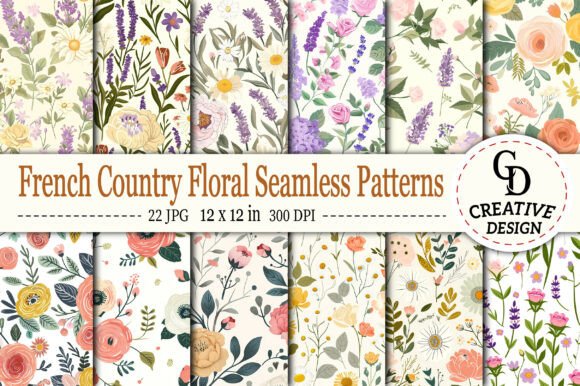
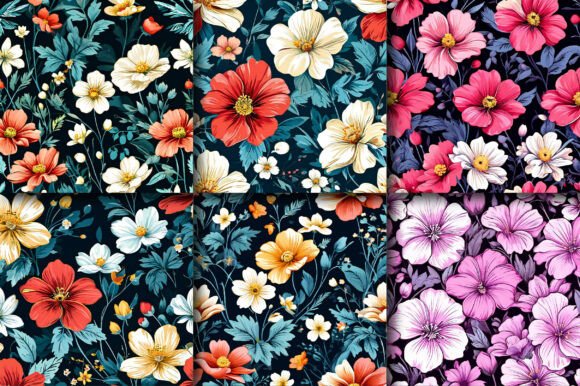
In the landscape of digital design, particularly within the realms of stationery, branding, and home décor, there is a persistent demand for aesthetics that convey sophistication without overwhelming the viewer. Delicate Flowers Garden Patterns address this need by offering a collection of lush, intricate designs characterized by small, subtle floral motifs. For professionals ranging from freelance graphic designers to small business owners in the e-commerce space, these patterns serve as more than just decorative elements; they are foundational assets that can elevate the perceived value of a product or brand identity.
This collection, comprising six high-resolution JPG files at 3600 x 3600 pixels, is engineered for versatility and ease of integration into existing creative workflows. Whether you are preparing wedding invitations, developing a refined brand identity, or producing sublimated merchandise, understanding how to effectively utilize these assets is key to achieving a cohesive and polished final output. The following analysis explores the practical application of these patterns across various professional and personal projects, focusing on preparation, execution, and quality control.
Understanding the Asset Profile and Technical Specifications
Before integrating any visual asset into a production pipeline, it is crucial to understand its technical constraints and capabilities. The Delicate Flowers Garden Patterns set is provided in JPG format, which, while universally compatible, requires specific handling to maintain image integrity during scaling and printing. Each file measures 3600 x 3600 pixels, a dimension that ensures sufficient resolution for large-format prints while remaining manageable for standard digital editing software.
- Resolution and Scale: At 3600 pixels per side, these images offer exceptional clarity when printed at standard sizes (such as A4, Letter, or standard invitation dimensions) at 300 DPI. However, users must be cautious when attempting to stretch these patterns beyond their original aspect ratio or size, as JPEG compression artifacts may become visible if not managed correctly.
- Format Compatibility: As JPG files, these assets are immediately usable in major design platforms like Adobe Photoshop, Illustrator, Canva, and Affinity Designer. This eliminates the need for complex conversion steps, allowing creators to move directly from selection to implementation.
- Visual Characteristics: The designs feature soft colors and intricate details. This subtlety is a strategic advantage, as it allows text and other primary design elements to remain legible. Unlike bold, high-contrast patterns that compete for attention, delicate florals provide a textured background that supports rather than dominates the content.
Strategic Applications in Stationery and Event Design
One of the most immediate and high-value applications for these patterns lies in the creation of elegant stationery and romantic wedding invitations. In this sector, consistency and emotional resonance are paramount. Clients often seek designs that evoke a sense of timeless beauty and tranquility, qualities inherent in the Delicate Flowers Garden Patterns.
Workflow Integration for Invitations
When designing invitations, the pattern should be treated as a background layer. To ensure efficiency and consistency:
- Template Creation: Import one of the six JPG files into your design software as a smart object or background layer. Set the opacity slightly lower if the pattern is dense, ensuring that typography remains readable.
- Color Harmonization: Use the color palette extracted from the floral pattern to select fonts and accent colors. This creates a unified visual language. Soft pastels in the flowers might pair well with gold foil accents or deep navy text, depending on the desired mood.
- Repetition Management: If the pattern does not tile seamlessly, use clipping masks to contain the design within specific areas, such as borders or corner ornaments, rather than using it as a full-page background. This reduces visual clutter and adds a bespoke feel.
This approach minimizes revision cycles because the client sees a cohesive design early in the process. By leveraging the pre-existing elegance of the pattern, designers spend less time creating custom illustrations and more time refining typography and layout.
Branding and Identity Systems
For entrepreneurs and marketers, establishing a brand identity that feels both approachable and premium is a constant challenge. Delicate Flowers Garden Patterns can serve as a versatile texture for packaging, social media graphics, and website headers. The key to successful implementation here is restraint and repetition.
Consider a small business selling artisanal candles or organic skincare products. These industries benefit from associations with nature, purity, and care. Applying a delicate floral pattern to product labels or tissue paper reinforces these values subconsciously. When integrating these patterns into a broader brand system:
- Consistency Across Touchpoints: Use the same pattern file across all marketing materials. Whether it appears on a mobile pop socket, a tote bag, or a business card, the visual continuity strengthens brand recognition.
- Contrast and Legibility: Because the patterns are detailed, always test white or dark overlays on top of the image to ensure text pops. A semi-transparent white box behind text is a common technique to maintain readability over intricate backgrounds.
- Scalability Testing: Before committing to a print run, preview the pattern at thumbnail size. Intricate details that look beautiful at 3600 pixels may disappear or turn into muddy blobs when viewed on a small mobile screen. If detail loss occurs, consider simplifying the design or using the pattern only for larger formats.
Production and Print-on-Demand Logistics
The versatility of these JPG files extends significantly into the realm of physical goods production. From sublimation T-shirts to ceramic mugs, the ability to transfer high-quality digital art onto physical substrates is a critical skill for freelancers and hobbyists alike. The 3600 x 3600 pixel resolution makes these assets "print-ready" for a wide range of items, but success depends on proper preparation.
Sublimation and Apparel
For sublimation printing on hoodies, T-shirts, and pillows, the pattern needs to be aligned with the fabric’s weave and the printer’s color gamut. Since the Delicate Flowers Garden Patterns feature soft colors, they translate well to light-colored fabrics. On darker fabrics, a white underbase layer is essential to preserve the vibrancy of the floral hues. Designers should check the ICC profiles of their printers to ensure that the soft pinks, greens, and blues in the pattern render accurately.
Home Décor and Accessories
When applying these patterns to decals, phone cases, or printable decorations, edge-to-edge tiling becomes a consideration. If the JPGs do not include seamless tiling instructions, designers may need to use the "offset" filter in Photoshop to create a repeating tile. This allows for efficient coverage of larger surfaces like throw pillows or wall art without visible seams.
Furthermore, organization plays a vital role in managing multiple variations. With six distinct files, it is advisable to tag and sort them by color temperature or density before starting a project. This reduces search time and helps in selecting the right pattern for a specific client brief—perhaps a cooler-toned flower for a winter-themed product and a warmer one for summer apparel.
Quality Control and Long-Term Usability
To maximize the return on investment for these assets, creators must implement robust quality control measures. This involves checking for compression artifacts, ensuring color accuracy across different devices, and maintaining file backups.
- Compression Artifacts: Even at high resolutions, JPGs can suffer from blockiness in flat color areas. Always inspect the edges of petals and leaves at 100% zoom. If artifacts are present, consider converting the image to PNG for non-print uses where transparency might be needed, though this increases file size.
- Color Space Management: Ensure that your design software is set to the correct color mode (RGB for digital, CMYK for print). Mismatching these can lead to dull or shifted colors in the final product. The soft tones of the garden patterns are particularly susceptible to shifting if the wrong profile is applied.
- Asset Archiving: Keep the original 3600 x 3600 px files in a secure, backed-up location. Do not rely solely on working copies. As trends evolve, these timeless floral designs can be repurposed for new seasons or collections, making their long-term preservation valuable.
Conclusion
The Delicate Flowers Garden Patterns collection offers a powerful tool for designers and creators looking to infuse their work with elegance and tranquility. By understanding the technical specifications, strategically applying the patterns to stationery, branding, and physical goods, and maintaining rigorous quality control, professionals can streamline their workflows and deliver superior results. These assets are not merely decorative; they are functional components of a larger design ecosystem that, when used correctly, enhance the aesthetic appeal and commercial viability of a wide array of products.