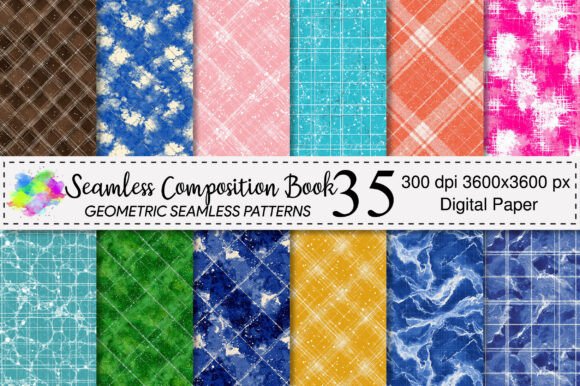
Seamless Composition Book Patterns
The composition notebook is more than just a vessel for notes; it is a cultural icon. From the humble marble cover to the stark black-and-white grid, this design language communicates organization, learning, and creativity. For designers, educators, and entrepreneurs, tapping into this aesthetic offers a unique opportunity to create products that feel instantly familiar yet professionally polished. The Seamless Composition Book Patterns bundle provides a versatile toolkit for bringing this classic academic look into modern digital and print projects.
These patterns are not merely decorative backgrounds. They are structural elements that can define the tone of a planner, add texture to a social media graphic, or serve as the foundation for a sublimation product. By utilizing high-resolution, seamlessly repeating tiles, creators can ensure that their designs maintain integrity whether they are scaling them up for a large poster or tiling them across a small digital interface.
Why Classic Aesthetics Matter in Modern Design
In an era of minimalist interfaces and flat design, there is a growing appreciation for tactile, textured aesthetics. The composition book pattern bridges the gap between nostalgia and utility. It evokes the feeling of school days, late-night study sessions, and the joy of capturing new ideas on paper. However, when digitized correctly, these patterns offer a level of sophistication that appeals to adults aged 20–50 who value both style and function.
The versatility of these patterns lies in their ability to adapt. A traditional marble texture can be used for a luxury journal cover, while a bold splatter grunge pattern might suit a punk-rock zine or an edgy event flyer. Understanding how to leverage these visual cues allows you to target specific audiences effectively. For instance, teachers looking for classroom décor might prefer clean grid lines and subtle plaid, while young adult planners might benefit from vibrant, colorful backgrounds with geometric overlays.
Technical Advantages of Seamless Tiling
One of the most critical aspects of using pattern packs like this is the technical execution. A truly seamless pattern repeats without visible seams, creating an infinite canvas. This is achieved through careful alignment of edges during the design process. With a resolution of 300 DPI and dimensions of 3600×3600 pixels, these files are optimized for high-quality printing and crisp digital display.
- Print-Ready Quality: At 300 DPI, the patterns retain sharpness even when printed on large formats. This is essential for physical products like notebooks, stickers, or wall art where pixelation would ruin the professional appearance.
- Digital Versatility: High-resolution assets allow for cropping and resizing without loss of detail. Whether you are designing a website background, an email header, or a YouTube thumbnail, the clarity remains consistent.
- Efficiency: Seamless tiles reduce file size compared to full-page images while providing endless coverage. This makes loading times faster for web users and easier to manage within design software like Photoshop, Illustrator, or Canva.
Creative Applications for Different Audiences
The true value of the Seamless Composition Book Patterns bundle emerges when applied to specific use cases. Here is how different professionals can integrate these assets into their workflows.
For Educators and Content Creators
Teachers and homeschooling parents are always looking for resources that engage students visually. These patterns can transform standard worksheets into exciting learning materials. Imagine a math worksheet with a subtle grid background that helps align equations, or a history handout featuring a vintage marble texture that adds gravitas to the content. You can also create classroom decorations, such as bulletin board borders or name tags, that tie into a "back-to-school" theme without looking cheap.
Blogging educators can use these patterns for featured images or downloadables. A lead magnet offering a "Student Planner Template" becomes more attractive when the preview image showcases a beautifully tiled composition book cover. This visual appeal increases click-through rates and establishes authority in the educational niche.
For Small Business Owners and POD Entrepreneurs
If you run a Print-on-Demand (POD) store, composition book patterns are a goldmine. Sublimation printing thrives on all-over prints, and seamless patterns are perfect for this technique. You can create custom notebooks, journals, phone cases, and tote bags that feature unique marble or splatter designs. Because the patterns are seamless, you can scale them to fit any product dimension without worrying about awkward cuts or misalignments.
Consider diversifying your product line by combining these patterns with other elements. Layer a geometric layout over a solid color background to create a modern twist on the classic look. Use bold plaid styles for seasonal collections, such as autumn-themed stationery sets. The key is to maintain consistency in your brand’s visual identity while experimenting with textures and colors.
For Digital Planners and App Developers
The digital planning community is vast and competitive. To stand out, your app or template needs a distinctive aesthetic. Seamless patterns provide a way to customize every page of a digital planner. You can assign different patterns to different sections—perhaps a calming marble texture for weekly spreads and a stimulating grid for daily task lists.
For app developers, these assets can be used for UI/UX design. Backgrounds for note-taking apps, calendar views, or dashboard widgets can benefit from the structured look of composition book grids. This creates a sense of order and familiarity for users, making the digital experience feel more like writing in a physical notebook.
Design Tips for Maximum Impact
To get the best results from your pattern selections, keep the following principles in mind:
- Maintain Contrast: Ensure that text placed over patterns remains readable. If using a busy splatter or marble design, consider adding a semi-transparent overlay or a text box with a solid background to improve legibility.
- Balance Complexity: Not every project needs a heavy texture. Use simple grid or plain color patterns for functional documents where distraction should be minimized. Reserve complex geometric or grunge styles for creative projects where visual interest is the goal.
- Consistency is Key: When creating a series of products, such as a complete planner set, choose a cohesive palette. Stick to two or three main pattern styles throughout the collection to create a unified brand experience.
- Test Your Tiles: Always preview your seamless patterns in a larger context before finalizing your design. Check for any visible seams or repetitive artifacts that might become noticeable after prolonged viewing.
Expanding Your Creative Toolkit
Incorporating Seamless Composition Book Patterns into your workflow is not just about saving time; it is about elevating the quality of your output. These patterns provide a foundational layer that supports good design principles: structure, texture, and harmony. Whether you are designing a simple printable sticker sheet or a comprehensive business branding package, having access to high-quality, versatile assets empowers you to experiment with confidence.
As trends evolve, the core appeal of the composition book remains constant. It represents the act of creation itself. By using these patterns, you are connecting your work to that timeless tradition while adapting it for contemporary needs. Explore the various styles available—from the sophisticated marble to the playful plaid—and discover how they can enhance your next project. The possibilities are limited only by your imagination and your willingness to apply these tools thoughtfully and creatively.
Ultimately, the goal is to produce work that resonates with your audience. A well-designed composition book pattern can evoke feelings of nostalgia, productivity, and professionalism. It signals to the user that care has been taken in the presentation. In a crowded market, those small details often make the difference between a forgotten item and a cherished tool. Take advantage of the resources available, refine your skills, and bring a touch of classic elegance to your modern creations.